Left Ventricle Assist Device - Mechanical Lead
Summary:
For my Junior Design class, we were tasked to create an LVAD. Here's the catch...
This project wasn't just about design, it was about documentation, regulation, and thinking exactly like how a real company would do it.
We first had to think about user needs, then make our design requirements and then also make sure we are following specific ISO standards. While we can't follow them exactly, we still had to design as if we were going to implant this into someones body.
I had already made my peristaltic pump, but this time, I knew that I wanted to do a centrifugal. Reason why? Because BiVacor + Heartmate does a centrifugal so I thought I would just copy off the best and make my own.
After my team and I finalized our user needs and design input requirements, I was tasked to create our first design.
This project wasn't just about design, it was about documentation, regulation, and thinking exactly like how a real company would do it.
We first had to think about user needs, then make our design requirements and then also make sure we are following specific ISO standards. While we can't follow them exactly, we still had to design as if we were going to implant this into someones body.
I had already made my peristaltic pump, but this time, I knew that I wanted to do a centrifugal. Reason why? Because BiVacor + Heartmate does a centrifugal so I thought I would just copy off the best and make my own.
After my team and I finalized our user needs and design input requirements, I was tasked to create our first design.
Design:
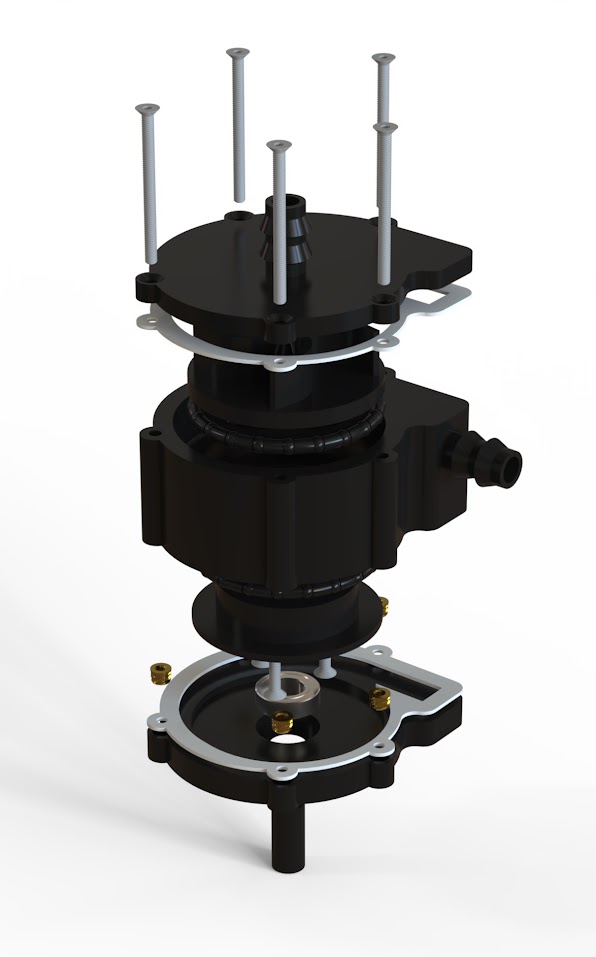
I knew one of our biggest problems would be blood shear. I did some research and decided to design the impeller to be semi-open with a 125º exit angle. This would not only reduce the amount of shear but also increase efficiency and L/min output.
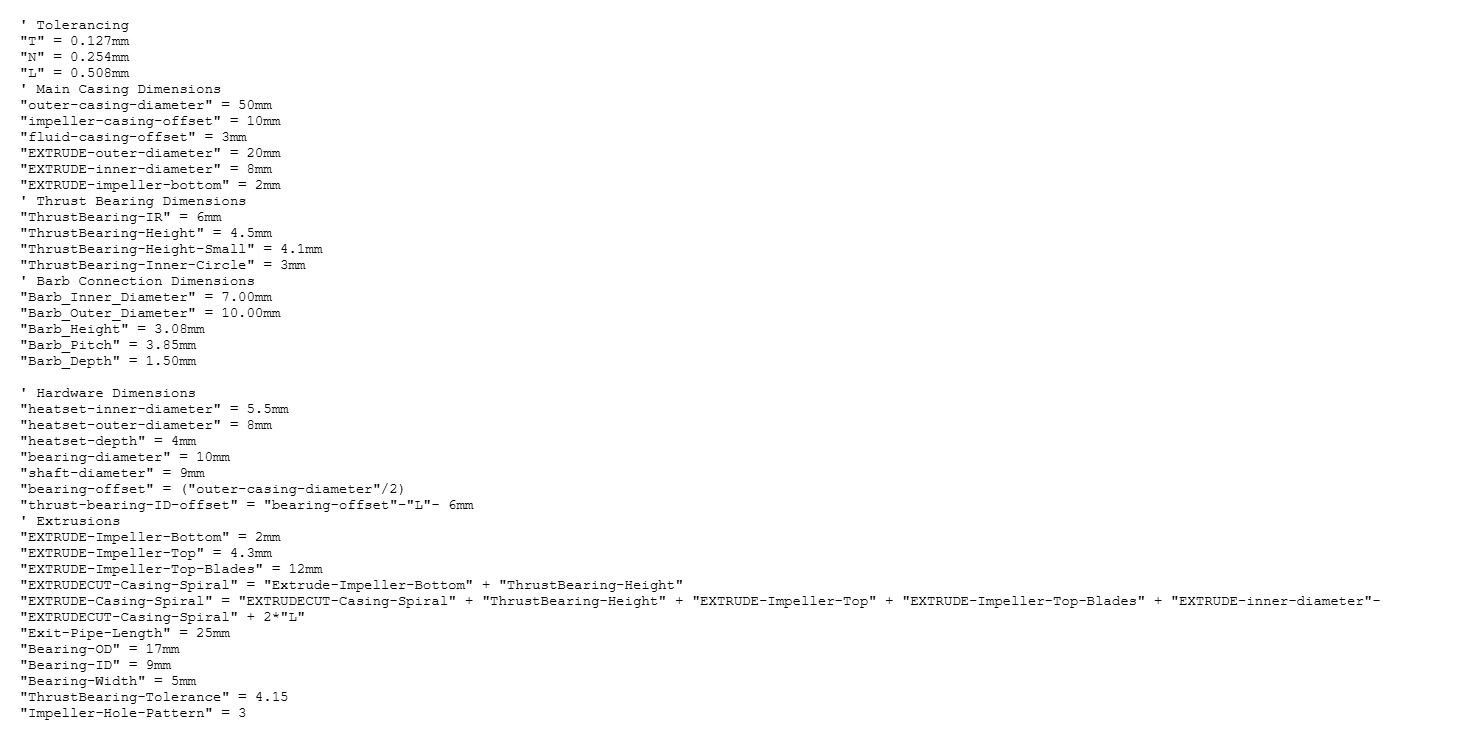
I am extremely proud of this design as everything is equation driven. I can edit 1 variable and everything else will dynamically change without breaking the entire design. This allows for quick iteration between each revision of the design.
There aren't many equations, and that's the beauty of it! I optimized it so much that despite the small number of equations, everything still does exactly what I want :)
This design design is entirely 3D printed. And with 3D printing, I had to make sure our design was air tight so, I did 2 TPU seals on the top and bottom. I also reduced friction by creating custom thrust bearings that would fit inside my design and allow for a smooth and almost frictionless surface.
I am extremely proud of this design as everything is equation driven. I can edit 1 variable and everything else will dynamically change without breaking the entire design. This allows for quick iteration between each revision of the design.
There aren't many equations, and that's the beauty of it! I optimized it so much that despite the small number of equations, everything still does exactly what I want :)
This design design is entirely 3D printed. And with 3D printing, I had to make sure our design was air tight so, I did 2 TPU seals on the top and bottom. I also reduced friction by creating custom thrust bearings that would fit inside my design and allow for a smooth and almost frictionless surface.
Issues:
Some issues were minor and I won't talk about them here. Only the major ones
Issue 1:
The first one I had noticed is that my impeller wouldn't always start spinning smoothly right away. So, I did some testing!
Tolerancing? No.
Smoothness of the part? No.
Too much friction? Not really.
I was lost for a couple days. What I found it to be was so simple yet something I had overlooked.
I added those TPU seals to ensure it was water tight. How did I get it to be water tight? I compressed it.
WELL that part density has to go somewhere!
So, I found out when I tightened it, my TPU seals were rubbing up against the impeller fins causing it to not be able to spin.
Issue 2:
During my first tests, the motor had spun so fast that I had melted the PLA
I thought I had thought of everything yet, I did not expect this to happen.
Issue 1:
The first one I had noticed is that my impeller wouldn't always start spinning smoothly right away. So, I did some testing!
Tolerancing? No.
Smoothness of the part? No.
Too much friction? Not really.
I was lost for a couple days. What I found it to be was so simple yet something I had overlooked.
I added those TPU seals to ensure it was water tight. How did I get it to be water tight? I compressed it.
WELL that part density has to go somewhere!
So, I found out when I tightened it, my TPU seals were rubbing up against the impeller fins causing it to not be able to spin.
Issue 2:
During my first tests, the motor had spun so fast that I had melted the PLA
I thought I had thought of everything yet, I did not expect this to happen.
Some issues were minor and I won't talk about them here. Only the major ones
Issue 1:
The first one I had noticed is that my impeller wouldn't always start spinning smoothly right away. So, I did some testing!
Tolerancing? No.
Smoothness of the part? No.
Too much friction? Not really.
I was lost for a couple days. What I found it to be was so simple yet something I had overlooked.
I added those TPU seals to ensure it was water tight. How did I get it to be water tight? I compressed it.
WELL that part density has to go somewhere!
So, I found out when I tightened it, my TPU seals were rubbing up against the impeller fins causing it to not be able to spin.
Issue 2:
During my first tests, the motor had spun so fast that I had melted the PLA
I thought I had thought of everything yet, I did not expect this to happen.
Issue 1:
The first one I had noticed is that my impeller wouldn't always start spinning smoothly right away. So, I did some testing!
Tolerancing? No.
Smoothness of the part? No.
Too much friction? Not really.
I was lost for a couple days. What I found it to be was so simple yet something I had overlooked.
I added those TPU seals to ensure it was water tight. How did I get it to be water tight? I compressed it.
WELL that part density has to go somewhere!
So, I found out when I tightened it, my TPU seals were rubbing up against the impeller fins causing it to not be able to spin.
Issue 2:
During my first tests, the motor had spun so fast that I had melted the PLA
I thought I had thought of everything yet, I did not expect this to happen.
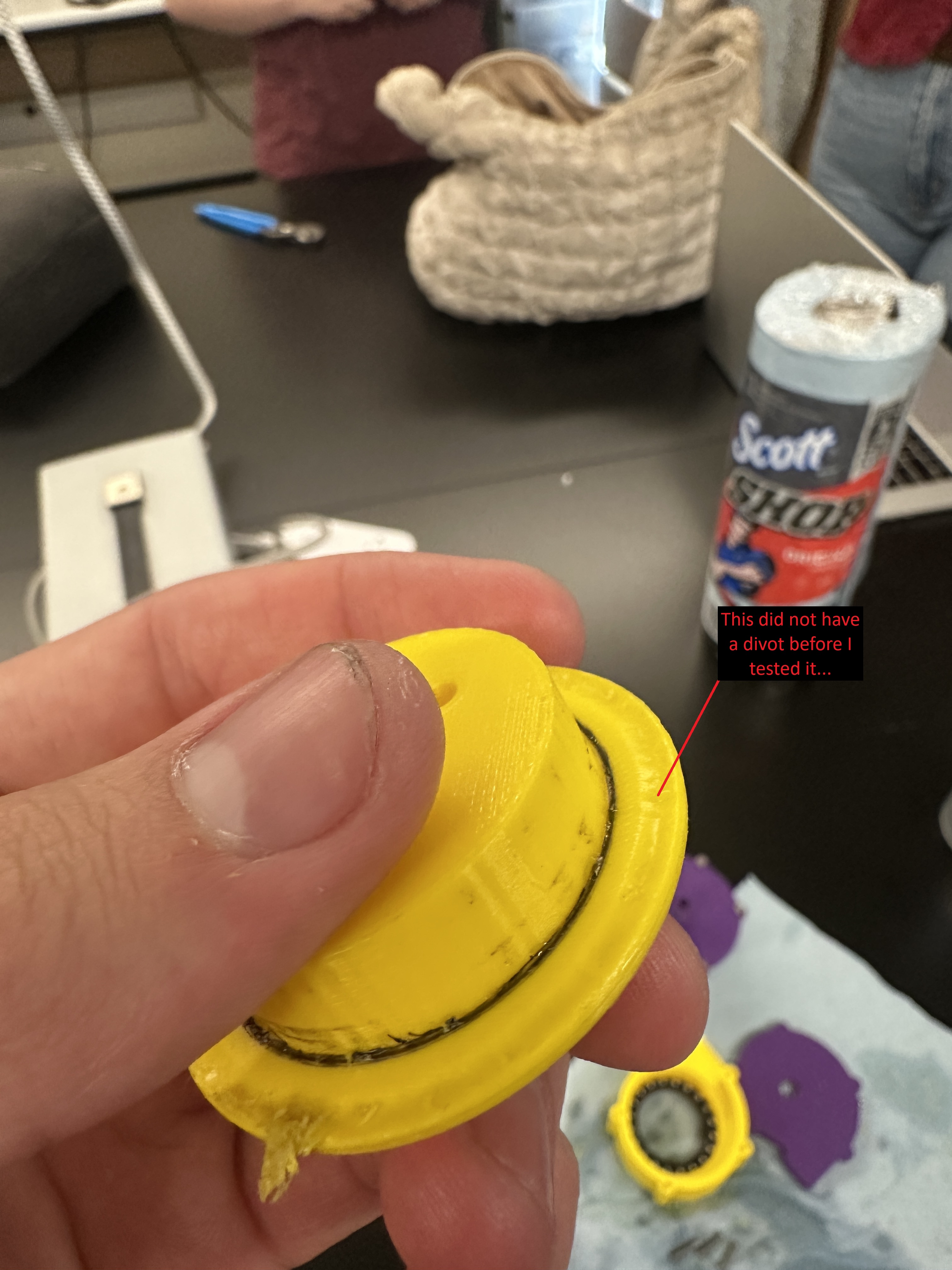
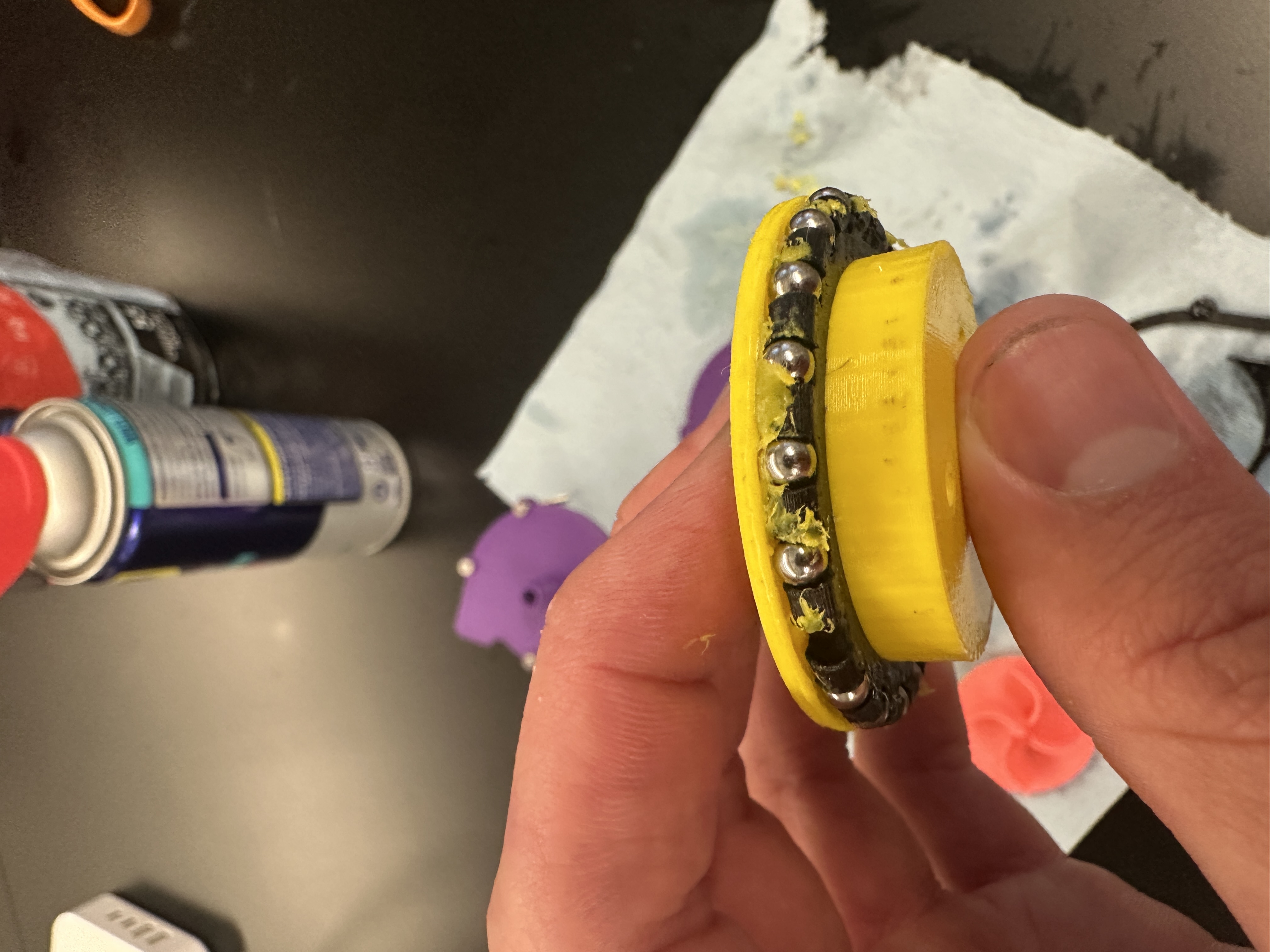
As you can see, it melted. Not what I had planned.
This ended up becoming the biggest issue I had because my motor was just spinning too fast and my design was too efficient. A good problem to have!
What did I do? I printed it out of ABS and added lubricant.
Not the best solution but given the timeline before the semester ended, it's what I had to do.
You could argue that I could have machined it but, this design was no way near designed to be machined. It would have been nearly impossible to machine given the geometry that I had.
Result:
We had set our goal to be 5L/min and we exceeded that by 68%! Achieving 8.4L/min.